Applied ecological research for improved environmental policy decision making
Research themes
-

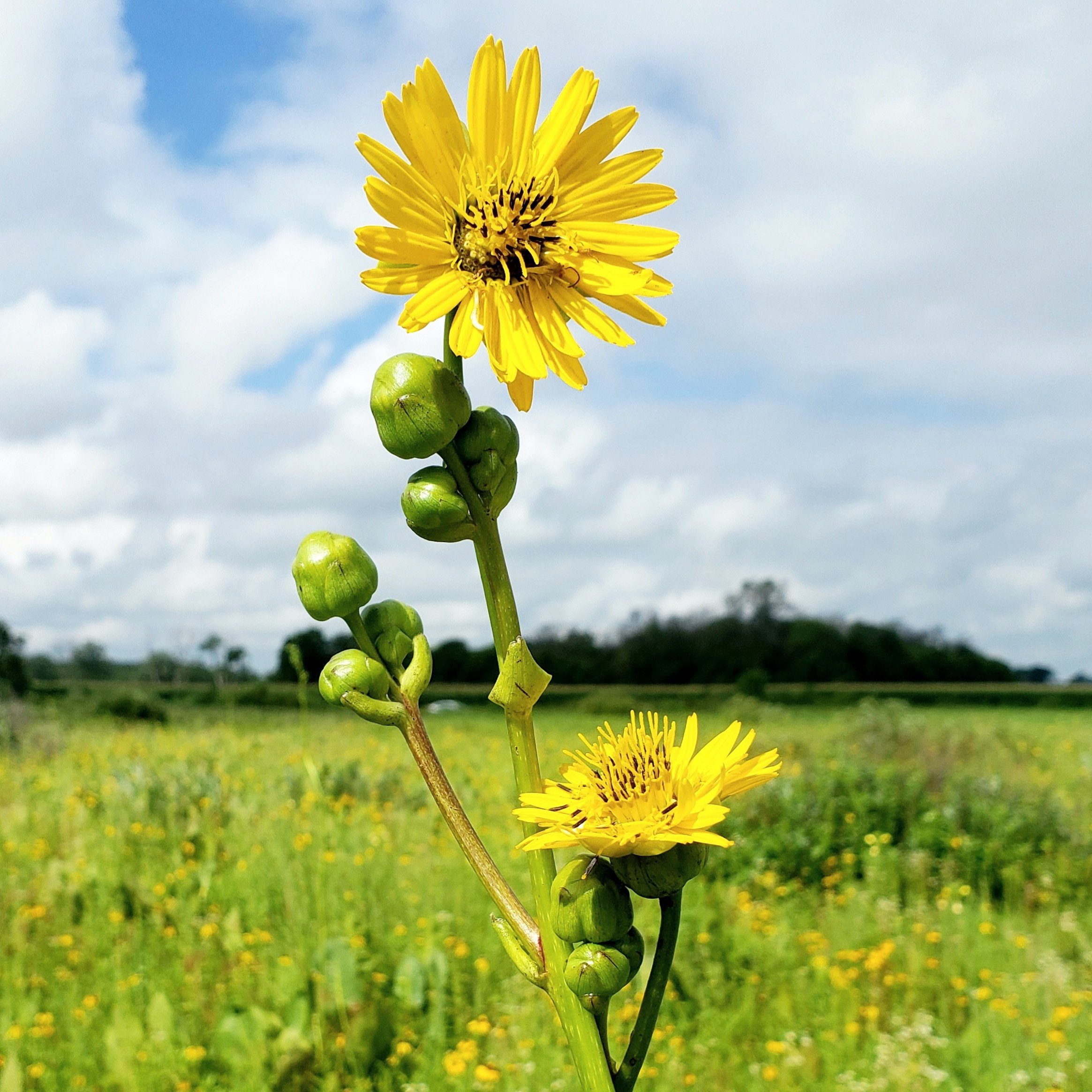
Plant physiology
How do individuals respond to their environment? What drives intra- and interspecific variation across environments?
-

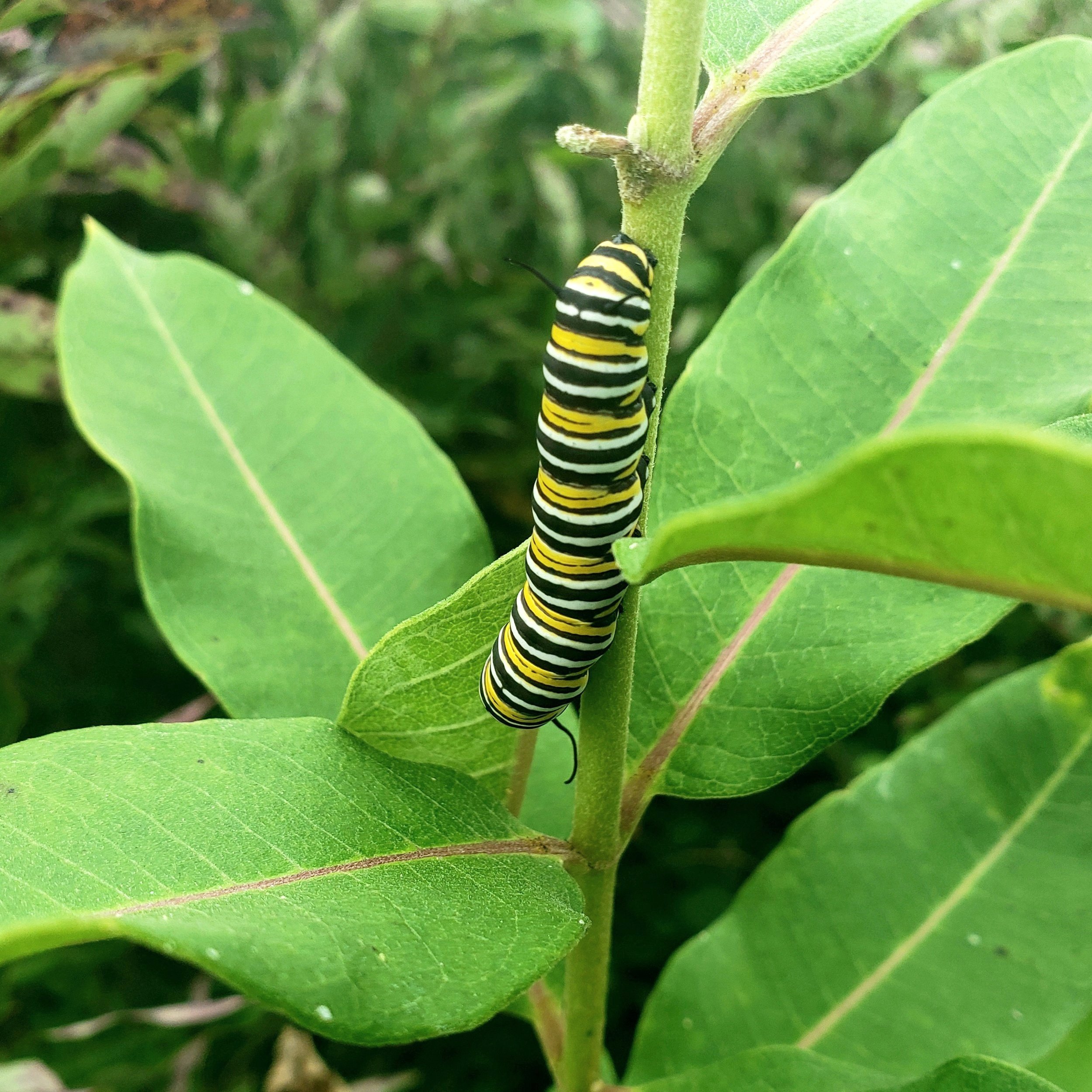
Community assembly
Does physiology scale to predict species success in a community context? What else limits which species establish and persist?
-
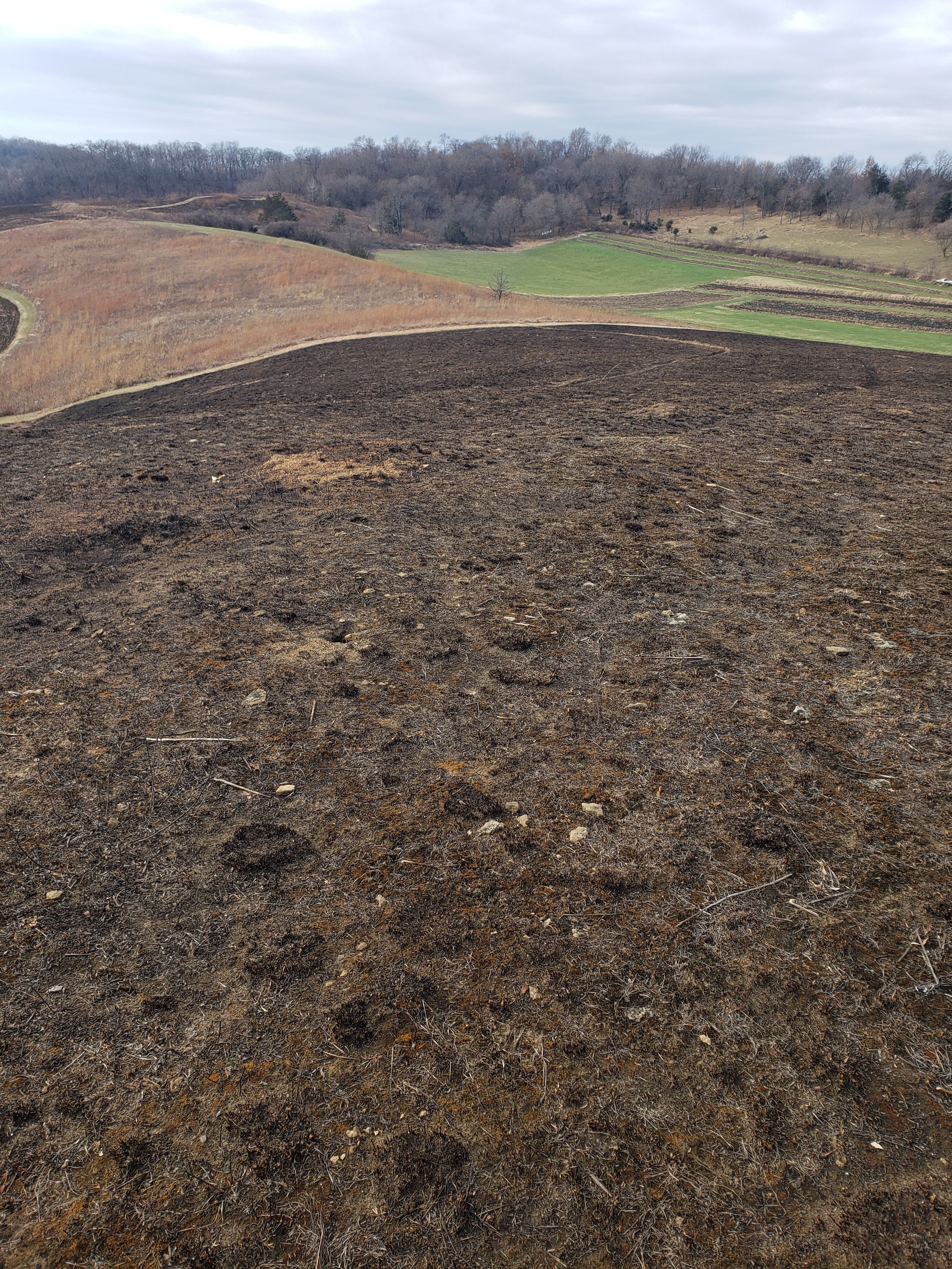
Environmental change
How do climate and land use changes alter plant physiology and community assembly? How does management alter outcomes?
I use a variety of methods to understand plant form and function, from commonly and quickly measured “soft” traits such as specific leaf area and seed mass to physiological “hard traits” such as water potential and photosynthetic rate. These techniques allow me to investigate how plants vary in their survival strategies and withstand the abiotic and biotic constraints of their environments. I am interested in bettering our understanding of the amount of and the mechanism underpinning variation, from individuals to species to communities. I am especially focused on using these insights to inform future restoration and management planning.
Plant physiology
I collect and use long-term data sets to monitor the presence and abundance of species that make up plant communities. Especially in the fire-adapted ecosystems that my research has been focused in thus far, community assemblages are dynamic, and changes in the plant community can provide insight into the abiotic and biotic pressures on a system that affect plant fitness. Community composition can also inform ecosystem resilience and services. These understandings can help us plan restoration and management interventions, such as over-seedling, translocation, and removal.
Community assembly
I combine observational and experimental techniques to investigate how plants respond to environmental change. Observational studies make use of historic data to monitor long-term plant responses to climate and land use changes, such as gradual warming or increased fragmentation, while experimental techniques manipulate current conditions to monitor plant responses under simulated future conditions, such as reduced snow cover or increased drought. I also experimentally test restoration and management outcomes under differing environmental conditions in order to better our predictions of current and future restoration and management efforts.
Environmental change
Peer-reviewed publications
-
Charton, K.T., and E.I. Damschen. In review. Woody plant removal alters herbaceous community functional but not taxonomic composition in encroached temperate grasslands. Restoration Ecology.
Charton, K.T., J.J. Henn, M.A. Homann, C.R. Warneke, and E.I. Damschen. In review. Plant functional traits support temperate grassland resilience to reduced winter insulation caused by managed disturbance regimes and climate change. American Journal of Botany.
Charton, K.T., K.A. McCulloh, and E.I. Damschen. In review. Forbs are more negatively affected by multiple changing conditions than a dominant shrub in managed temperate grasslands. Journal of Applied Ecology.
-
Richards, J.H., K.T. Charton, S.L. McFarlane, A.F. Widell, N.M. Haddad, M.B. Wyer, and E.I. Damschen. In press. Rethinking the undergraduate textbook as a tool to build a diverse scientific community. Frontiers in Ecology and the Environment.
-
Charton, K.T., and E.I. Damschen. 2024. Grassland woody plant management results in rapid changes to woody vegetation structure and abiotic conditions but not herbaceous plant community composition. Journal of Applied Ecology. https://doi.org/10.1111/1365-2664.14716
Augustine, S.P., I. Bailey-Marren, K.T. Charton, N.G. Kiel, and M.S. Peyton.2024. Improper data practices erode the quality of global ecological databases and impede the progress of ecological research. Global Change Biology 30: e17116. https://doi.org/10.1111/gcb.17116
-
Ahler, S.J., L.M. Ladwig, K.T. Charton, J.J. Henn, and E.I. Damschen. 2023. Dispersal and persistence traits inform long-term understory plant community change in savannas. Plant Ecology 224: 361-371. https://doi.org/10.1007/s11258-023-01307-3
-
Ward, S.G., E.S. Menges, K.T. Charton, P.A. Gonsiska, and C.L. Peterson. 2022. Using demographic findings to compare wild and translocated populations of Florida goldenaster (Chrysopsis floridana) in west-central Florida, U.S.A. Restoration Ecology 30: e13577. https://doi.org/10.1111/rec.13577
-
Charton, K.T., V.L. Sclater, and E.S. Menges. 2021. Mapping spatially explicit vegetation gaps in Florida rosemary scrub using unmanned aerial vehicles. Ecosphere 12: e03470. https://doi.org./10.1002/ecs2.3470
Popular science articles
-
-
Charton, K.T. 2023. “Damschen Lab joins the Midwest Climate Adaptation Science Center.” Damschen Lab Website: 15 November. Web.
-
Charton, K.T. 2019. Partnership for protection. Highlands News-Sun: 9 January. Print.
-
Charton, K.T., and S.M. Koontz. 2018. Rare plant thrives after fire. Highlands News-Sun: 5 December. Print.
Charton, K.T. 2018. Internship program beneficial. Highlands News-Sun: 14 September. Print.
Charton, K.T. 2018. Water, water everywhere. Highlands News-Sun: 3 July. Print.
Charton, K.T., and H.M. Swain. 2018. Archbold visits New York Botanical Garden. Highlands News-Sun: 13 June. Print.
Charton, K.T. 2018. Going native: The “right place, right plant” perspective. Highlands News-Sun: 6 June. Print.
Charton, K.T. 2018. Archbold Station celebrates International Museum Day. Highlands News-Sun: 23 May. Print.
-
Charton, K.T., and C. Fidler. 2015. The Museum of Vertebrate Zoology receives an Institute of Museum and Library Services Museums for America Collections Stewardship Grant. Museum of Vertebrate Zoology Archives: 4 November. Web.
Charton, K.T., and C. Fidler. 2015. From the field: Western deserts. Museum of Vertebrate Zoology Archives: 9 October. Web.